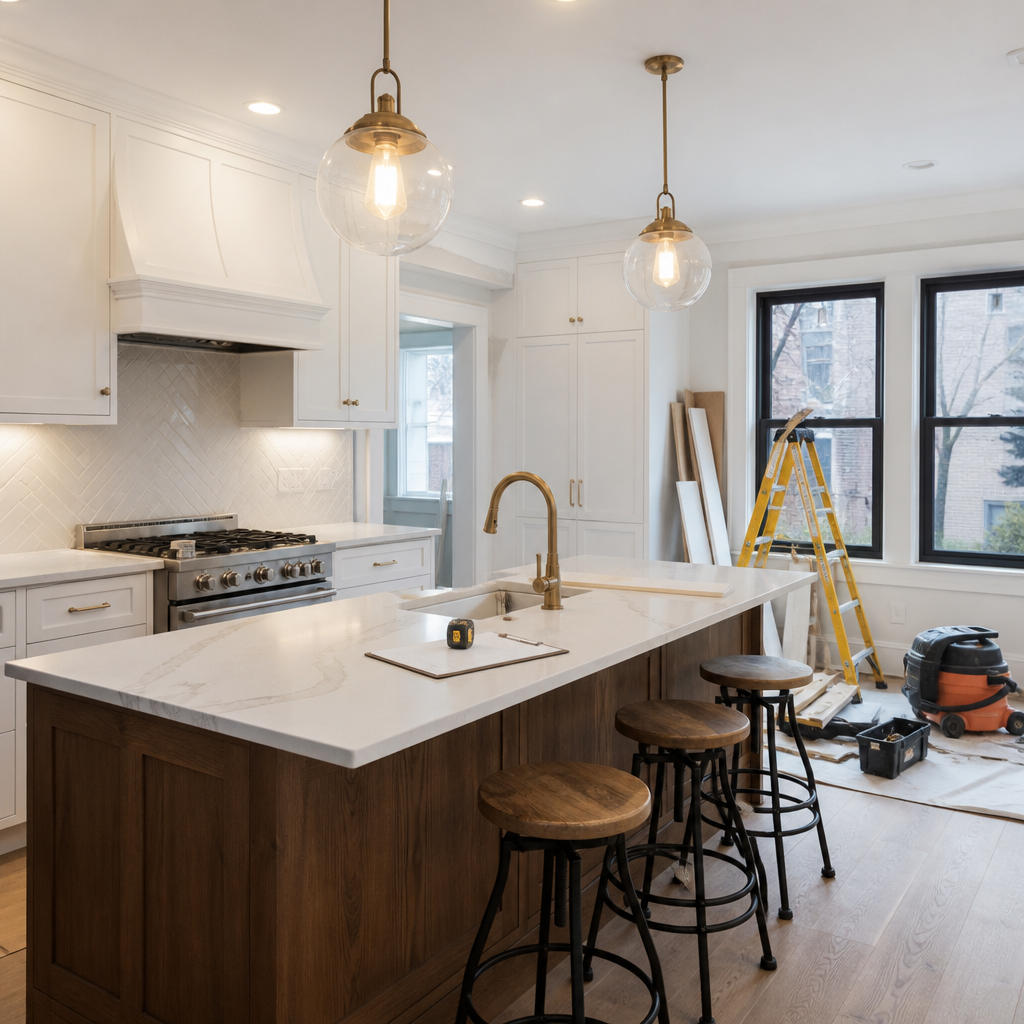
Home Remodeling in Evanston: What It Costs and How to Start
Home remodeling in Evanston starts with two questions: what will the work really cost, and how do you begin without making an expensive mistake? For city-to-suburb renovators and suburban upgraders, those questions usually show up right after closing on an older house, or right when the current layout stops working for daily life.
Evanston is not a generic remodeling market. Housing stock ranges from vintage condos and early twentieth century single-family homes to midcentury properties and newer infill homes. That mix affects scope, permitting, lead-safe practices, structural conditions, and how far a budget goes. A kitchen update in a 1920s home is different from reworking a 1990s layout, even when both projects look similar on paper.
At Icon Building Group, we’ve seen that the biggest cost surprises rarely come from finishes alone. They come from hidden conditions, unclear allowances, and starting design before the homeowner has decided what problem the remodel needs to solve. Good planning keeps the project grounded. Clear pricing keeps it honest.
For Evanston homeowners, remodeling also matters because moving is not always the better answer. Many families like their block, schools, commute, and lot, but need a more functional kitchen, a better primary bath, a finished basement, or a reworked first floor. Remodeling lets the house catch up to the way the family actually lives.
Icon Building Group is a founder-led family business run by the Murphy family, and its remodeling work is built around fixed-price contracts with allowances capped in writing. That matters in a market where vague estimates can drift fast once walls open up. If you want to talk through your project and next steps, Request a consultation.
What does home remodeling in Evanston cost, and how should you start?
Home remodeling in Evanston costs more or less based on scope, existing conditions, structural changes, permit requirements, and finish level, and the right way to start is with a defined plan before construction pricing begins. Homeowners who begin with clear goals, measured drawings, and realistic selections make better decisions and avoid revisions that waste time and money.
Cost is driven first by the type of remodel. A cosmetic refresh stays in one lane. A remodel that moves plumbing, removes walls, updates electrical service, or corrects old framing conditions enters a different category. In Evanston, older homes often need some combination of leveling, insulation upgrades, venting corrections, and code updates that are invisible at the first walkthrough but predictable if the contractor knows what to inspect.
Starting well means identifying the true objective. Sometimes the goal is resale positioning. Sometimes it is better daily function. For empty nesters, it may be aging in place with a first-floor suite or safer bath layout. For buyers who just left the city, it may be opening up compartmentalized rooms without stripping the home of its character.
What factors change remodeling cost the most in Evanston homes?
The biggest cost factors in Evanston remodeling are project scope, house age, system upgrades, layout changes, and material selections. Labor is only part of the equation. The real swings come from what the existing house requires once the design moves from wish list to buildable plan.
House age matters immediately. Many Evanston homes were built before modern wiring standards, insulation expectations, and current moisture-control practices. If a kitchen remodel exposes outdated branch wiring or undersized service, electrical work can expand. If a bathroom remodel reveals uneven joists or old galvanized plumbing, the project may need corrective work before finishes can be installed properly.
Layout changes also have an outsized effect. Keeping a sink, toilet, or range close to its current location usually controls labor better than relocating everything. Removing a load-bearing wall may require engineered beams, permit review, and more finish repair than homeowners expect. None of that is bad work. It just needs to be accounted for up front.
Selections are the other major driver. Cabinet construction, window quality, tile size, plumbing fixtures, appliance packages, and custom millwork all change the final number. The practical lesson is simple: cost follows decisions. A realistic budget is built from actual scope and actual selections, not broad allowances that leave room for surprise later.
Which remodeling projects make the most sense in Evanston?
The best remodeling projects in Evanston are the ones that solve a real livability problem and fit the house, block, and long-term ownership plan. Kitchens, bathrooms, basements, first-floor reconfigurations, and additions are the most common because they address the rooms people use hardest every day.
Kitchens lead for a reason. In many Evanston homes, the kitchen was designed for closed-door cooking, not modern family traffic. We often see narrow work zones, little pantry storage, and awkward transitions to dining or family rooms. A smart remodel can improve flow without forcing a full addition.
Bathrooms are another common pain point. Older homes often have small footprints, limited storage, and tub-shower combinations that no longer fit the household. A primary bath remodel may add a larger shower, better lighting, and ventilation that actually protects the house. On pre-1978 homes, using an EPA Lead-Safe Certified Firm is not optional window dressing. It is a real health and compliance issue.
Basements matter in Evanston because they can create usable square footage without changing the exterior footprint. But they only work well when moisture management, ceiling height, and egress are addressed honestly. A basement that looks finished but ignores water history is not a value add. It is deferred trouble.
How long does an Evanston remodel usually take?
An Evanston remodel usually takes as long as the design, selections, permitting, and construction complexity require, and the planning phase is often longer than homeowners expect. The right timeline is not the fastest promise. It is the one that matches the actual work.
Design and pre-construction come first. That includes field measurements, concept development, trade input, selection decisions, and pricing refinement. In our experience, projects move more cleanly when homeowners make the hard choices here instead of during demolition. Late decisions tend to create both schedule pressure and budget pressure.
Permitting adds another layer. Evanston review timing depends on project scope. Interior work may move differently than an addition, structural change, or exterior alteration. Historic considerations, zoning constraints, and utility coordination can also affect sequencing.
Construction duration then follows scope. A powder room update is not a whole-home remodel. A first-floor reconfiguration with structural work, new flooring throughout, and a full kitchen replacement requires careful phasing. Homeowners should also decide early whether they plan to live in the house during the work, because that affects protection, temporary utilities, and productivity.
Do you need permits for home remodeling in Evanston?
Yes, many remodeling projects in Evanston require permits, especially when the work touches structure, plumbing, electrical, mechanical systems, or exterior elements. Permit requirements are not red tape for its own sake. They are part of making sure the work is safe, code-compliant, and documented.
Kitchens often require permits when electrical circuits, plumbing, ventilation, or wall layouts change. Bathrooms commonly require permits because they involve plumbing, electrical, and ventilation work. Basement finishing may trigger egress and life-safety requirements. Additions and structural openings nearly always involve plan review and inspections.
Evanston homeowners should also understand that permit responsibility should be clear before the job starts. A legitimate remodeler explains what will be submitted, what drawings are needed, and what inspections should occur. That clarity protects the homeowner later, especially during resale or insurance questions.
For broader context on service types, neighborhoods, and remodeling categories across the region, see Home Remodeling in Chicago: Services, Costs, and Service Areas.
How should you compare remodeling options before you commit?
The best way to compare remodeling options is to look at scope, disruption, code impact, and long-term fit at the same time. Homeowners get into trouble when they compare only surface price and ignore what each path actually includes.
| Option | Best For | What It Usually Involves | Main Tradeoff |
|---|---|---|---|
| Cosmetic refresh | Homes with workable layout and sound systems | Paint, fixtures, surfaces, limited finish replacement | Lower disruption, but function may stay the same |
| Room-by-room remodel | Owners who need to phase work over time | One kitchen, bath, or basement at a time | Less immediate strain, but repeated mobilization and staggered living disruption |
| Major interior reconfiguration | Homes with poor flow or outdated room relationships | Wall removal, structural work, system updates, finish replacement | Better daily function, but more design and permit complexity |
| Addition plus remodel | Families who need more square footage and better layout | New footprint with coordinated remodeling in existing areas | Most transformative option, but also the largest commitment |
A good comparison also asks how long you plan to stay. If this is your ten-year house, choices should reflect durability and function, not just quick visual impact. If resale is the priority, the scope should be disciplined and matched to the neighborhood.
How does Icon approach pricing and planning for Evanston remodeling?
Icon approaches Evanston remodeling with fixed-price contracts and allowances capped in writing, after selections and scope are defined. That means the homeowner is not signing up for a moving target. It also means pricing reflects the real project rather than a low opening number that grows later.
This matters because many homeowners are not afraid of spending money on the right remodel. They are afraid of not knowing where the number will land. A fixed-price contract addresses that fear directly. It creates a cleaner decision point and a more accountable construction process.
Icon also takes a help-first approach. Some of the strongest reviews on remodelwithicon.com come from people the company advised but never built for, which is why Served Not Built stands out as a trust signal. The company is also recognized with Best of Houzz Service awards from 2019 through 2026, plus Best of Houzz Innovator in 2025 and 2026, and maintains memberships in the National Kitchen and Bath Association, the National Association of the Remodeling Industry, the National Association of Home Builders, and the Home Builders Association of Greater Chicago.
What should Evanston homeowners do before contacting a remodeler?
Evanston homeowners should define goals, gather inspiration carefully, note known house issues, and decide what success looks like before the first meeting. You do not need a finished design, but you do need priorities. That shortens the path to a workable plan.
Start with how you live. List what is failing now, what you want added, and what you want preserved. In Evanston, that last point matters. Many owners want better function without flattening the architectural character that made them buy the house in the first place.
Then gather practical information. Survey documents, past permit records, appliance preferences, and a realistic move-versus-remodel discussion all help. If you suspect lead paint, past water intrusion, or settlement, say so early. None of those issues automatically kill a project, but hiding them guarantees a rougher planning process.
Icon serves Evanston along with nearby suburbs including Wilmette, Glencoe, Winnetka, Highland Park, Lake Forest, Lincolnshire, Arlington Heights, Barrington, Hawthorn Woods, Lake Zurich, and Schaumburg across northern Illinois and southern Wisconsin.
Frequently Asked Questions
Is remodeling an older Evanston home different from remodeling a newer one?
Yes. Older homes often bring lead-safe requirements, hidden framing issues, outdated wiring, and plumbing corrections that newer homes usually do not.
Should I remodel all at once or in phases?
It depends on budget, tolerance for disruption, and how connected the spaces are. If the work affects multiple adjacent rooms, doing it together is often more efficient.
Can I live at home during the remodel?
Sometimes, yes. It depends on which rooms are under construction, how utilities are affected, and whether safe separation from the work area is realistic.
What is the first meeting with a remodeler supposed to cover?
The first meeting should cover goals, scope, constraints, house conditions, timing, and what planning steps come next. It is not just a quick price visit.
How do I avoid budget surprises during remodeling?
Define the scope clearly, make selections early, and use a fixed-price contract with allowances capped in writing. Vague allowances are where many surprises begin.
Home remodeling in Evanston works best when the process is clear from the start. Define the problem, build the right scope, understand permit and house-condition realities, and price the work with real decisions behind it. That approach leads to better design, fewer surprises, and a finished home that fits the way you actually live.
If you are planning a kitchen, bathroom, basement, addition, or whole-home remodel in Evanston, the next step is a practical conversation about your house and goals. Request a consultation with Icon.
Frequently Asked Questions
How much does home remodeling typically cost in Evanston?
Home remodeling costs in Evanston can vary widely because the local housing stock is so diverse. A straightforward cosmetic update, such as painting, refinishing floors, replacing fixtures, and upgrading finishes in a kitchen or bathroom, usually costs far less than a full gut renovation that involves moving walls, updating plumbing, or correcting older electrical systems. In general, homeowners should expect costs to rise when the project involves vintage homes, older condos, structural changes, custom millwork, or code-related upgrades that are often uncovered once work begins.
For example, a basic bathroom refresh may fall into a moderate budget range, while a full bathroom remodel with new tile, plumbing relocation, and waterproofing will cost substantially more. Kitchens tend to be one of the highest-cost spaces because cabinetry, countertops, appliances, electrical work, ventilation, and layout changes add up quickly. Whole-home remodels are priced even more individually, especially in Evanston neighborhoods where older homes may require plaster repair, insulation improvements, foundation work, or replacement of aging mechanical systems.
A realistic budget should also include soft costs and contingency funds. Permits, design fees, architectural drawings, engineering, material price changes, and temporary living arrangements can all affect the final number. In older Evanston homes, it is smart to set aside a contingency of at least 10 to 20 percent because hidden conditions are common. The most accurate way to understand your likely investment is to start with a site-specific consultation, where a contractor or design-build team can assess the age of the property, the scope of work, access limitations, and the finish level you want.
Why are remodeling costs in Evanston sometimes higher than homeowners expect?
Many homeowners are surprised by remodeling costs in Evanston because they compare local projects to broad online averages that do not reflect the realities of this market. Evanston homes often come with age-related complexity. A beautiful early twentieth-century house may also have outdated wiring, undersized service panels, uninsulated walls, uneven framing, plumbing that no longer meets current standards, or layers of previous repairs that must be corrected before new finishes can go in. Those conditions are not always visible at the start, but they directly affect labor, materials, and timeline.
Another major factor is the type of work required to preserve character while improving function. In Evanston, homeowners often want to modernize kitchens, open layouts, add storage, or improve bathrooms without losing historic charm. That often means blending new work with old details, matching trim profiles, protecting original floors, or carefully integrating updated systems into an older structure. Skilled labor for that kind of work typically costs more than standard production-style remodeling.
Condo and multifamily projects can also cost more because of building rules, restricted work hours, elevator use, parking limitations, and association approval requirements. Even in single-family homes, local permitting, inspections, and coordination with architects or structural engineers can add time and cost. The good news is that higher costs do not necessarily mean poor value. In a market like Evanston, thoughtful remodeling can improve daily living, preserve long-term property value, and help an older home function much better for modern needs.
What is the best way to start a remodeling project in Evanston without making an expensive mistake?
The smartest way to start is with a clear plan, not with demolition or finish selections. Before choosing tile, cabinets, or paint colors, define what is not working in the home and what you want the remodel to accomplish. That could mean creating a better kitchen layout, adding a bathroom, improving storage, opening a closed floor plan, or making the home more comfortable and efficient. A successful project starts when priorities are clear and realistic, because those priorities guide budgeting and help prevent costly mid-project changes.
Once your goals are defined, the next step is to bring in qualified professionals early. In Evanston, that often means talking with a remodeling contractor, design-build firm, architect, or designer who has experience with older homes and local permitting requirements. An early walkthrough can reveal whether your ideas align with your budget and whether the home has structural, mechanical, or code-related issues that need to be addressed first. That step alone can prevent one of the most expensive mistakes homeowners make: planning a project around assumptions instead of actual site conditions.
It is also important to get detailed proposals and ask good questions. Make sure the scope of work is clearly defined, understand what is included versus excluded, and ask how allowances, change orders, permits, and contingencies will be handled. If you are remodeling a condo, confirm association requirements before design work goes too far. If you are buying an older home with plans to renovate, consider a contractor consultation during the due diligence period if possible. The more information you gather upfront, the less likely you are to run into avoidable surprises later.
Should I remodel all at once or complete my Evanston renovation in phases?
That depends on your budget, the condition of the home, and how disruptive the work will be. In many Evanston homes, phased remodeling can be a practical strategy, especially if you have recently purchased the property and want to spread costs over time. Tackling the most urgent needs first, such as electrical upgrades, plumbing repairs, roofing issues, water damage, or inefficient layouts in high-use areas, can make the home safer and more livable while allowing you to plan future phases more carefully.
However, there are situations where doing everything at once is the smarter financial decision. If multiple rooms are connected, if walls need to be opened, or if the project requires major mechanical upgrades, combining work into one larger renovation can reduce duplication in labor, permitting, and finish repairs. For example, if you know you want to remodel the kitchen now and the adjacent mudroom or powder room later, it may be more efficient to address those spaces together while trades are already on site. This is especially true when structural changes, flooring continuity, or plumbing and electrical work overlap.
The key is sequencing. Even if you remodel in phases, the entire home should be viewed through a master plan. That helps ensure that the first phase does not make later improvements more difficult or more expensive. A contractor or designer can help you identify which upgrades are foundational and which can wait. In older Evanston homes, it is often wise to complete behind-the-walls work before spending heavily on decorative finishes. That approach protects your investment and reduces the chance of having to redo completed work.
How long does a home remodeling project usually take in Evanston?
Project timelines in Evanston depend on scope, property type, design complexity, permit review, and the condition of the home once work begins. A smaller remodeling project, such as a modest bathroom renovation or limited finish update, may take several weeks once construction starts. A kitchen remodel usually takes longer, especially if custom cabinetry, inspections, layout changes, or specialty materials are involved. Whole-home remodels and additions can take several months or more, particularly in older homes where hidden issues are common and decisions must be made as conditions are uncovered.
One reason timelines stretch is that construction is only one part of the process. Before work begins, homeowners often need time for design development, budgeting, material selections, measuring, engineering, permit preparation, and product ordering. In a city like Evanston, where many homes are older and every property has its own quirks, pre-construction planning is especially important. Skipping or rushing this phase may seem faster at first, but it usually creates delays later in the form of change orders, backordered materials, or redesign during construction.
To set realistic expectations, ask your remodeling team for a timeline that includes both pre-construction and construction milestones. You should also discuss long-lead items, inspection scheduling, access to the site, and whether you can remain in the home during the work. A well-managed project will still involve some uncertainty, but good planning greatly improves timeline predictability. In Evanston, the homeowners who have the best remodeling experience are usually the ones who start early, make decisions promptly, and leave room in the schedule for the realities of renovating older homes.